How EV Efficiency Can Reduce Your Home Charging Costs
When people compare electric vehicles, one number usually gets most of the attention: range.
How many kilometres can the car travel on a full charge?
But there is another number worth watching: how much electricity does the car actually need to travel those kilometres?
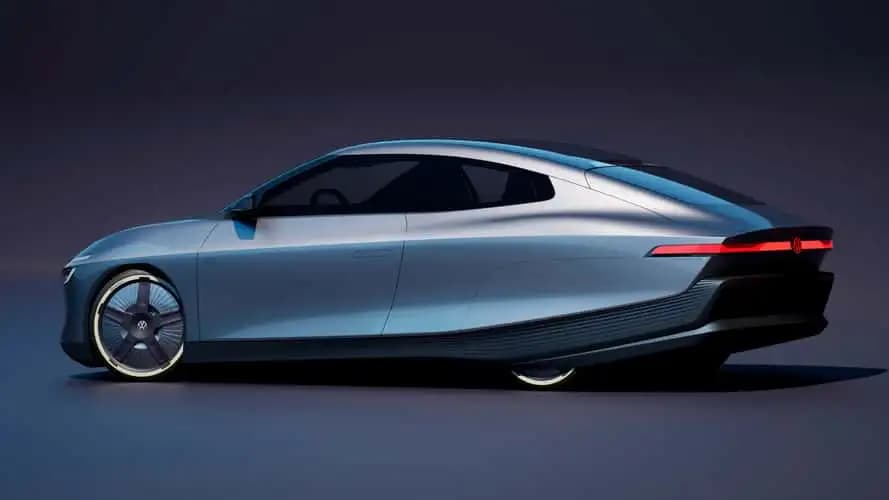
Volkswagen's new Mission Efficiency concept brings this question into focus. The near-production concept recently completed an officially documented 1,278.36-kilometre journey from Wolfsburg to Vienna, recording an average consumption of 6.89 kWh/100 km excluding charging losses and 7.51 kWh/100 km including them. Its 54.9 kWh battery was charged only once during the journey.
The vehicle is not a production model. Volkswagen describes it as a technology demonstrator designed to show what is possible when aerodynamics, weight, drivetrain efficiency and energy management are considered together.
So why should a Kerala homeowner with an EV care about a concept car in Germany?
Because using less electricity to travel the same distance can also change how much energy you need to buy and how much solar energy you may need to charge your car.
What Makes an EV Energy Efficient?
An EV's efficiency describes how much electrical energy it needs to travel a given distance.
It is commonly expressed as kWh per 100 km.
For example, an EV that consumes 15 kWh/100 km needs less electricity to travel 100 km than one that consumes 20 kWh/100 km.
That difference may look small on paper.
Over thousands of kilometres, however, the energy requirement adds up.
Volkswagen's Mission Efficiency concept was designed around exactly this principle. Its extremely low drag coefficient of 0.158, lightweight construction and efficient electric drivetrain helped it achieve a documented 6.89 kWh/100 km during its long-distance test, excluding charging losses.
The lesson is simple:
An EV does not only become more useful by carrying more electricity. It can also become more useful by wasting less of it.
Why Does EV Efficiency Matter for Charging Costs?
Every kilometre you drive requires energy.
If your EV uses less electricity per kilometre, the amount of electricity needed for the same monthly driving distance also decreases.
Consider a simple example.
Suppose an EV travels 1,000 km in a month.
At 15 kWh/100 km, its driving energy requirement would be around 150 kWh.
At 20 kWh/100 km, it would be around 200 kWh.
The actual electricity drawn from the charger can be higher because charging itself involves losses, but the comparison illustrates the basic point.
Lower energy consumption means fewer units of electricity are required for the same distance.
And where that electricity comes from becomes the next question.
Where Does Your EV Get Its Charging Power?
An EV can be charged in several ways.
You might use a public charging station during a long trip, charge at home overnight, or combine home charging with electricity generated by a rooftop solar system.
For regular daily driving, home EV charging can be particularly convenient because the vehicle can be plugged in when it is parked.
SolarMaster provides residential EV charger installation and can also integrate EV charging with solar panels where the property and system design are suitable.
This creates an interesting combination:
Efficient EV + home charger + rooftop solar
The three solve different parts of the energy equation.
Can Solar Power Your EV Charging?
Yes, a rooftop solar system can be used to supply electricity for EV charging when the system is designed for that purpose.
The important point is that solar generation and EV charging do not always happen at the same time.
Solar panels generally generate electricity during daylight hours. If the vehicle is at home and charging during those hours, some of the solar generation can potentially be used directly for the vehicle.
If the EV is usually away during the day, the situation is different.
Your solar electricity may instead be used by your home, exported according to your applicable electricity arrangement, or otherwise accounted for through your solar system's configuration.
So simply installing solar does not automatically mean that every unit used for EV charging will come directly from the panels.
The charging pattern matters.
Is a Solar EV Charger the Same as a Normal Home EV Charger?
Not necessarily.
A home EV charger is primarily responsible for safely supplying electricity to your vehicle.
A solar-integrated EV charging setup considers the relationship between:
Solar generation
Household electricity consumption
EV charging demand
Grid electricity
Charger capacity
Your charging schedule
The exact configuration depends on the property and the system being installed.
This is why a proper assessment matters before choosing an EV charger.
SolarMaster's residential EV charging service includes checking the home's electrical setup and offers the option of connecting the charger with solar panels.
What Does Volkswagen's Solar Roof Have to Do With This?
There is another interesting part of the Mission Efficiency concept.
Volkswagen has integrated a 370-watt photovoltaic system into the vehicle's glass roof and tailgate. The company estimates that, depending on location, season and weather, it could contribute up to 30 km of additional range per day.
This does not mean that a car with solar panels can replace a home charging system.
The vehicle's small photovoltaic system is intended as an additional source of energy, while the battery still relies on conventional charging.
But the idea illustrates something important:
Every bit of useful energy generation can matter when an EV is designed around efficiency.
For a homeowner, however, a rooftop has much more available surface area than a car roof.
That is where rooftop solar becomes particularly relevant.
Why Is Rooftop Solar More Practical for EV Charging?
A car roof has limited space.
A home's rooftop can provide considerably more area for solar panels, depending on the property.
Volkswagen's Mission Efficiency concept puts photovoltaic cells directly into the vehicle's roof and boot lid. The 370 W solar system is designed to provide additional energy to the vehicle, with Volkswagen estimating up to 30 km of additional range per day under favourable conditions.
But a car roof has an obvious limitation: there is only so much surface available for solar cells.
A home rooftop offers a different possibility.
Instead of using a small solar surface to supplement the energy used by one vehicle, a properly designed rooftop solar system can generate electricity for multiple needs within a home — including EV charging.
That's what makes Volkswagen's solar-equipped EV interesting for homeowners.
The question isn't whether your car can generate all the electricity it needs from its roof. It is:
If your EV already needs electricity, could your home's rooftop generate some of that electricity?
The answer depends on your home's electricity consumption, available roof area, sunlight, shading, solar system capacity and your EV's charging requirements.
This is where solar EV charging becomes more practical than putting a small solar system on the car itself. A rooftop system can be planned around the energy needs of both the household and the vehicle.
So, while Volkswagen is experimenting with solar on the car, homeowners can look at the much larger opportunity of solar for the home and the car.
When Should You Charge Your EV With Solar?
If your EV is parked at home during the day, charging during periods of solar generation can allow you to use more of your generated electricity directly.
For example, someone working from home may be able to plug in the vehicle during daylight hours.
Someone who drives to work every morning and returns in the evening may have fewer opportunities for direct daytime solar charging.
That does not necessarily make solar unsuitable.
It simply means the system needs to be designed around the way the household actually uses energy.
This is one reason solar planning should consider future electricity loads, including an EV, rather than looking only at today's electricity bill.
How Much Solar Do You Need for an EV?
There is no single answer.
The required solar capacity depends on factors such as:
How many kilometres you drive each month
Your EV's energy consumption
How often you charge
How much electricity your home already uses
How much solar energy your roof can generate
When your vehicle is normally parked at home
Whether you want the solar system to cover only EV charging or your entire household load
For example, a household that already consumes substantial electricity and then adds an EV may need a larger solar system than a household with low electricity consumption.
So the better approach is to calculate your total energy requirement rather than treating the EV separately.
Should You Install an EV Charger Before Solar?
It depends on your plans.
If you already own an EV and need convenient charging, a properly installed home EV charger can make sense on its own.
If you are also planning rooftop solar, it is worth discussing both requirements together.
The installer can then consider the home's electrical capacity, charger requirements, solar system size and future energy use.
This can help avoid designing one system today and discovering later that another major upgrade is required.
For homeowners considering EV charger installation in Kerala, this combined assessment becomes particularly useful when an EV is expected to become a significant part of the home's electricity consumption.
What Should You Check Before Installing a Home EV Charger?
A charger should not simply be selected because it has a higher charging speed.
Your home needs to be assessed for factors such as:
Electrical capacity
The existing electrical connection and household load should be considered before installation.
Charger requirements
The charger's power rating should be compatible with the vehicle and the home's electrical setup.
Cable route
The distance between the electrical connection, charger and parking location affects installation requirements.
Safety protection
Appropriate electrical protection and proper installation are essential for a safe charging setup.
Future solar plans
If you are planning rooftop solar, tell the installer before the electrical design is finalised.
SolarMaster's EV charging installation process includes consultation, site survey, load analysis, installation, testing and after-sales support.
Can Solar Reduce the Cost of Charging an EV?
Solar can reduce the amount of grid electricity required for EV charging when solar generation is available and appropriately used.
But it is important not to think of solar charging as automatically meaning free charging.
Solar panels have an upfront installation cost. The actual financial benefit depends on factors such as:
Solar system size
EV electricity consumption
Household electricity usage
Solar generation
Charging schedule
Electricity tariffs
System design
The goal is not simply to generate as much solar electricity as possible.
The goal is to design a system that makes sense for your total energy consumption.
What Can EV Owners Do to Reduce Energy Consumption?
You don't need a concept car to make your EV more efficient.
Simple driving and maintenance habits can also affect energy consumption.
Maintaining the recommended tyre pressure, avoiding unnecessary weight, using regenerative braking appropriately and avoiding excessive speeds can all contribute to efficient driving.
Air conditioning, traffic, road conditions, temperature and driving style can also affect real-world consumption.
So the efficiency figure advertised for an EV should be treated as a reference rather than a guarantee of what every driver will achieve.
Your actual consumption will depend on how and where you drive.
The Bigger Idea: Efficient Driving and Efficient Charging Go Together
The Volkswagen Mission Efficiency concept is interesting because it shifts the conversation from “How big is the battery?” to “How intelligently can we use energy?”
The concept combines aerodynamics, lightweight construction, drivetrain efficiency and energy management to reduce the amount of electricity needed to travel. Volkswagen's documented road test recorded 6.89 kWh/100 km excluding charging losses and 7.51 kWh/100 km including them.
For everyday EV owners, the same principle can be applied on a much simpler level.
You can look at:
How efficiently the car uses electricity.
How efficiently you charge it.
Where the charging electricity comes from.
And, if you have suitable roof space:
How much of that electricity your solar system can generate.
That is where EV charging and rooftop solar start to become part of the same energy plan.
Is Home EV Charging With Solar Right for You?
If you own an EV, the first question isn't necessarily whether you need the biggest charger or the biggest solar system.
Start with your actual usage.
How far do you drive each month?
How much electricity does your EV use?
When is the car normally parked at home?
How much electricity does your household already consume?
And how much solar energy can your property realistically generate?
Once you have those answers, it becomes easier to determine whether a standard home EV charger, a solar-integrated charging setup, or a larger rooftop solar system makes sense.
SolarMaster provides residential EV charger installation and solar-integrated charging solutions across Kerala.
Calculate Your Solar Potential
If you are considering an EV along with rooftop solar, start by looking at your existing electricity consumption.
SolarMaster's Solar Savings Calculator can provide an initial estimate of potential savings and a recommended solar system based on your electricity bill, location and selected system type.
Final Thoughts
Volkswagen's Mission Efficiency is a concept vehicle, not a car you can currently buy. Its value is in demonstrating what can happen when engineers focus intensely on reducing energy consumption.
For EV owners, the idea is relevant even without a record-setting car.
Using less electricity to travel more efficiently is one part of the equation. Charging that vehicle intelligently is another.
And for homeowners, rooftop solar can add a third part: generating some of the electricity needed by both the home and the EV.
The smartest setup isn't necessarily the one with the biggest battery, fastest charger or largest solar system.
It is the one designed around how you actually use energy.
FAQs
Does a more efficient EV cost less to charge?
Generally, an EV that uses fewer kWh to travel the same distance requires less electricity for that distance. Actual charging cost also depends on charging losses, electricity tariffs and charging conditions.
What is EV efficiency?
EV efficiency refers to how much electrical energy a vehicle uses to travel a given distance, commonly expressed in kWh/100 km.
Can I charge my EV using rooftop solar?
Yes. A properly designed solar and EV charging setup can use solar-generated electricity for EV charging when generation and charging occur at suitable times.
Can solar panels reduce EV charging costs?
Solar can reduce the amount of grid electricity purchased for charging when solar generation is available and appropriately used. The actual savings depend on system size, electricity consumption, charging patterns and tariffs.
Is a home EV charger worth installing?
For EV owners who regularly charge at home, a dedicated charger can provide convenient and predictable charging. The right charger depends on the vehicle, electrical capacity, parking arrangement and charging requirements.
Can I install an EV charger and solar panels together?
Yes. Planning both together can allow the electrical requirements, solar capacity and charging setup to be considered as one energy system.
How do I know how much solar I need if I own an EV?
Start with your household electricity consumption and your EV's expected energy use. Your driving distance, charging pattern, roof area and solar generation potential should then be considered when sizing the system.
Where can I get EV charger installation in Kerala?
SolarMaster provides residential and commercial EV charging installation across Kerala, including site assessment, load analysis, installation, testing and optional solar integration.