
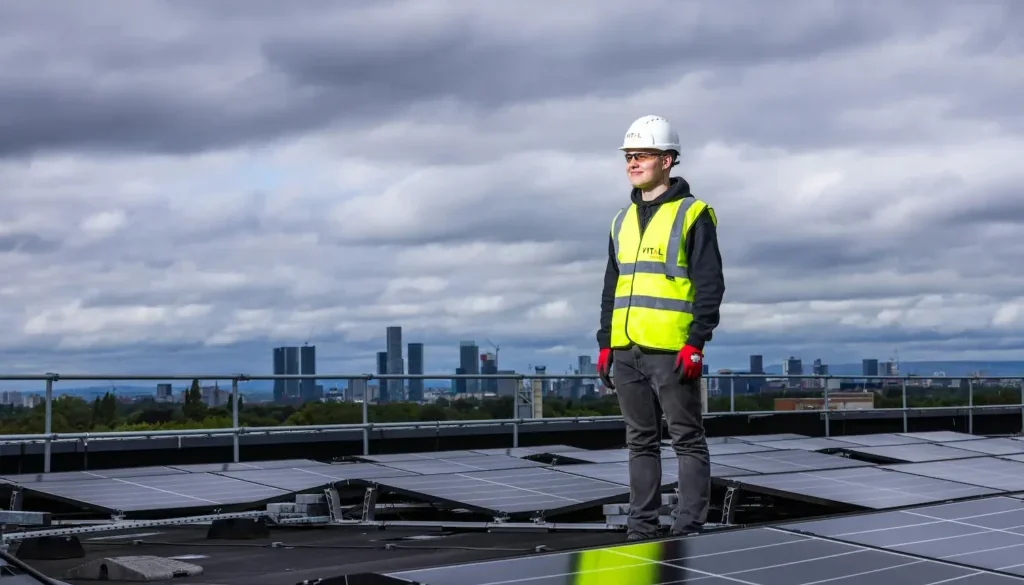
Solar for Manufacturing Units in Kerala – Reduce Electricity Costs by 40%
Electricity is one of the largest recurring operational expenses for manufacturing units in Kerala. Whether you operate a small fabrication unit in Ernakulam or a large-scale industrial plant in Kochi, rising grid tariffs directly impact profit margins.
Industrial solar power plant installation offers a proven solution, enabling manufacturing businesses to reduce electricity costs by up to 40% while improving long-term financial stability.
For factory owners, plant managers, and CFOs, solar is no longer an environmental initiative; it is a strategic financial decision.
Why Manufacturing Units in Kerala Are Switching to Solar
Kerala has one of the highest industrial electricity tariffs in India. For units running:
-
CNC machines
-
Compressors
-
Industrial ovens
-
HVAC systems
-
Continuous process machinery
Monthly electricity bills can range from ₹2 lakh to ₹20 lakh or more.
With rooftop or ground-mounted solar systems, a manufacturing unit can:
-
Offset peak daytime power consumption
-
Reduce dependency on grid electricity
-
Stabilize long-term energy costs
-
Improve EBITDA margins
Industrial solar systems are particularly effective because manufacturing operations typically run during daylight hours, aligning perfectly with solar power generation.
How Much Can a Manufacturing Unit Save?
Let’s break it down.
If a unit consumes:
-
30,000 units/month
-
Average tariff ₹8–10 per unit
Monthly bill: ₹2.4 – ₹3 lakh
A 100kW to 250kW solar power plant can offset a significant portion of this usage.
Estimated savings:
-
30–40% reduction in electricity costs
-
₹8–12 lakh savings annually (depending on load)
-
Payback period: 3–5 years
After payback, electricity generation is essentially free for the next 20+ years.
Industrial Solar Power Plant Installation in Kerala – System Sizes
For manufacturing units, system sizes typically range between:
| Plant Size | Ideal For | Approx Annual Generation |
|---|---|---|
| 50 kW | Small workshops | 75,000 units |
| 100 kW | Medium factories | 1.5 lakh units |
| 250 kW | Large units | 3.75 lakh units |
| 500 kW | Industrial clusters | 7.5 lakh units |
SolarMaster designs customized industrial solar systems based on:
-
Connected load
-
Sanctioned load
-
Rooftop space
-
Structural strength
-
Operational hours
CAPEX vs OPEX Model for Industrial Solar
Manufacturing businesses in Kerala can adopt two primary models:
CAPEX Model (Own the System)
-
Full investment by the factory
-
Higher ROI
-
Eligible for accelerated depreciation
-
Maximum long-term savings
OPEX / PPA Model
-
Zero upfront investment
-
Third-party investor installs system
-
The factory purchases power at a lower tariff
-
Ideal for cash flow-sensitive units
For profitable manufacturing companies, the CAPEX model often delivers superior long-term financial benefits.
Accelerated Depreciation Benefit for Manufacturing Units
One of the strongest financial incentives available to industrial solar adopters in India is accelerated depreciation under Section 32 of the Income Tax Act.
Eligible businesses can:
-
Claim up to 40% depreciation (subject to prevailing regulations)
-
Reduce taxable income
-
Improve project IRR
This significantly reduces effective system cost in year one.
For manufacturing units with strong taxable profits, solar becomes not just a cost-saving tool — but a tax optimization strategy.
Structural & Technical Considerations for Factories
Industrial solar installation differs from residential systems.
Key evaluation areas:
-
Roof type (sheet, RCC, truss)
-
Structural load capacity
-
Wind load compliance (Kerala coastal regions)
-
Transformer compatibility
-
Net metering approval
SolarMaster conducts detailed technical audits before installation to ensure system safety and compliance.
Ground-Mounted vs Rooftop Solar for Factories
Rooftop Solar
-
Utilizes unused roof space
-
Lower land requirement
-
Ideal for warehouses
Ground-Mounted Solar
-
Suitable for large campuses
-
Easier maintenance
-
Higher scalability
Manufacturing clusters in Kochi, Aluva, Perumbavoor, and Thrissur often benefit from hybrid approaches.
Solar for Manufacturing Units – ESG & Brand Advantage
Today’s industrial buyers, export clients, and corporate partners increasingly evaluate ESG performance.
By installing solar, manufacturing units can:
-
Reduce Scope 2 emissions
-
Strengthen sustainability credentials
-
Improve eligibility for global contracts
-
Align with green procurement standards
Solar is now a competitive advantage in B2B manufacturing.
Why Choose SolarMaster for Industrial Solar in Kerala?
SolarMaster specializes in:
-
Industrial solar power plant design
-
High-capacity inverters
-
Load-matched system planning
-
End-to-end EPC execution
-
Post-installation maintenance
We understand Kerala’s regulatory framework, DISCOM approvals, and industrial electrical infrastructure.
Our approach is ROI-first, not sales-first.
Is Solar Suitable for Your Manufacturing Unit?
Solar is ideal if:
-
Your monthly electricity bill exceeds ₹1.5 lakh
-
Your factory operates during daytime
-
You have available roof or land space
-
You want to reduce long-term operational risk
If unsure, a technical energy audit can determine feasibility.
Conclusion
For manufacturing units in Kerala, installing industrial solar power plants is no longer optional — it is financially strategic.
With:
-
Up to 40% electricity cost reduction
-
Accelerated depreciation benefits
-
3–5 year payback
-
25+ year lifespan
Solar transforms energy from an expense into an asset.
FAQs
Request an Industrial Solar Feasibility Assessment
If you operate a manufacturing unit in Kerala and want a detailed ROI report tailored to your facility:
-
Get load analysis
-
Payback projection
-
Structural feasibility study
-
Customized solar sizing
Contact SolarMaster today for a commercial solar consultation.
Keep Your Panels Shining! Want more power and longer life from your solar system?